The locked frame
Lock one reference frame and every frame after it is built from that one. It is the single mechanic that makes an AI lookbook read as one shoot rather than forty, and it is the same discipline as not moving the light once the first hour on set is over.
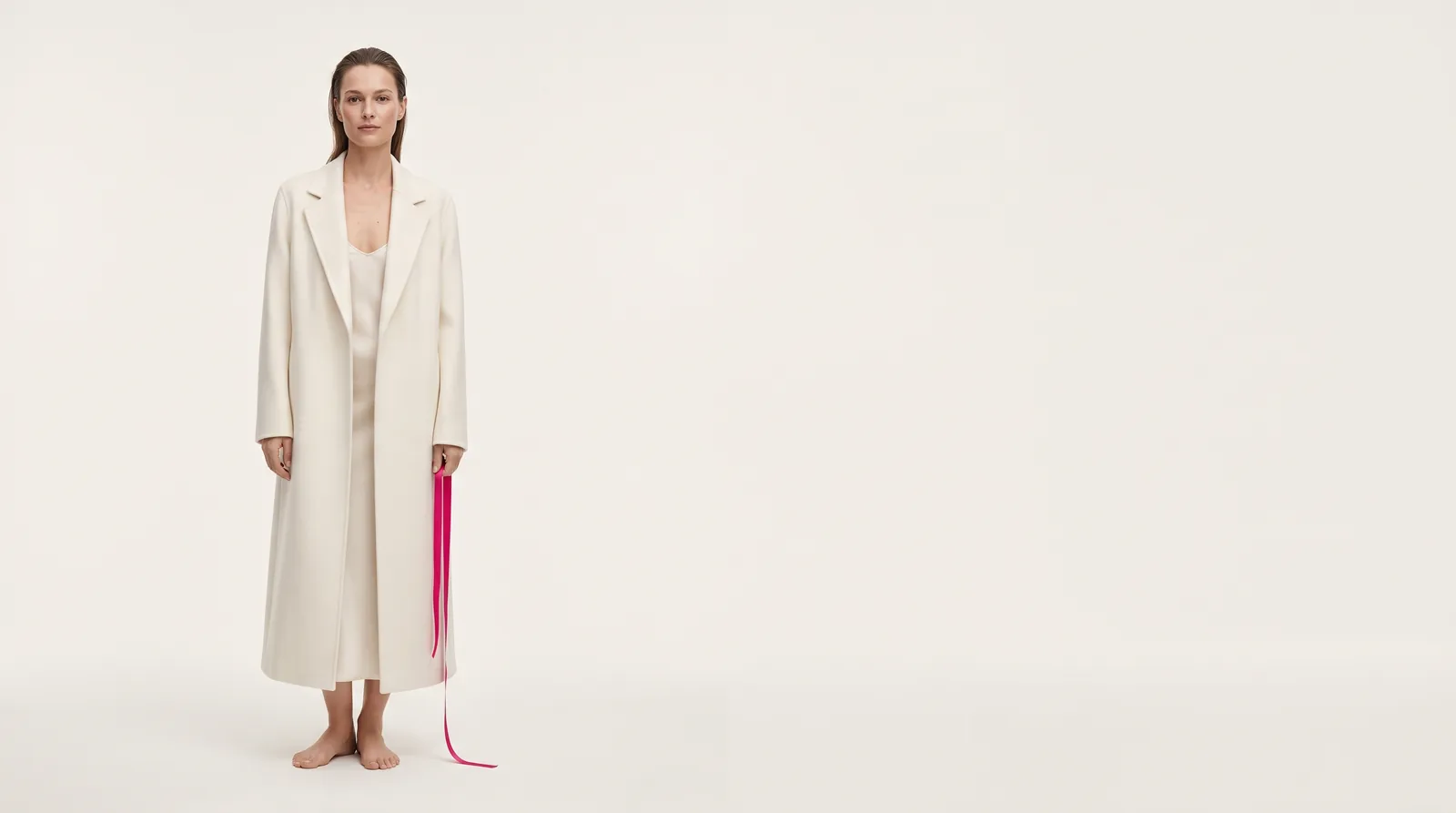
Lock one frame and every frame after it is built from that one. It is the single mechanic that makes an AI lookbook read as one shoot rather than forty. The house develops a reference, you approve it, and from then on the pose and the piece move while the face, the light and the ground hold still.
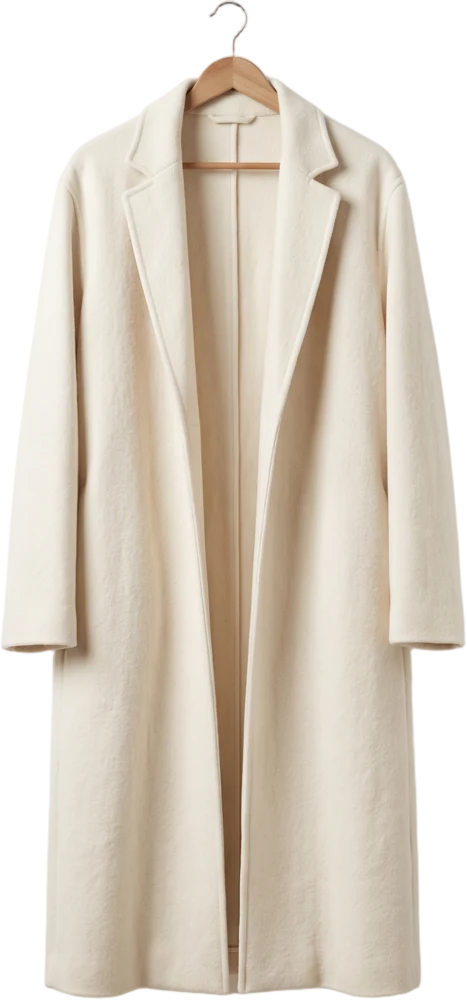
None of this is an AI insight. It is how a shoot has always worked. The first hour on set goes on finding the frame: the stand, the distance, the height of the key, where the feet land on the sweep. Once it is right nobody touches the light again, and every look for the rest of the day steps into the same frame. The garments change and the frame does not, which is the only reason four hundred e-commerce frames shot across three weeks look like they came from one afternoon.
Most image tools invert that. Each generation starts from nothing, so each one is a fresh roll on the light, the stance and how heavy the wool reads. Put the results in a grid and the drift is the first thing anyone sees. Not because any single frame is bad, but because frame three has a softer key than frame four and the eye catches it before the brain does. Buyers are extremely good at catching it. It is most of what they do.
What the lock actually holds
Six things carry forward into every variation developed from an approved frame.
- The model's identity, held by the model's collage rather than by a description of a face. That mechanic is the same model, every frame.
- The ground: the sweep, its colour, and the invisible line where the floor meets the wall.
- The light: key position, softness, and how it falls off across the set.
- The framing register: how much air sits above the head and below the feet, and where the horizon of the body lands.
- The camera language: body, lens, focal length and aperture, so depth and compression stay where they were.
- The realism clauses: skin with pores, fabric with weight, nothing retouched.
What the lock does not hold is what you asked to vary. The pose, the crop, the piece. That line is the design. A variation should differ along one axis you chose, not five you did not.
Why the steps run in that order
The six steps go models, pieces, ground, lock, variations, develop, from the choice that constrains the most to the choice that constrains the least. That is also the order a shoot gets planned in.
You cast before you pull the rail. You pull the rail before you settle the set, because a charcoal collection on a slate sweep is a different decision from an ivory one. You settle the set before you shoot the reference, because the sweep is in the reference. And you shoot the reference before you commit to anything else, because everything else is built on it.
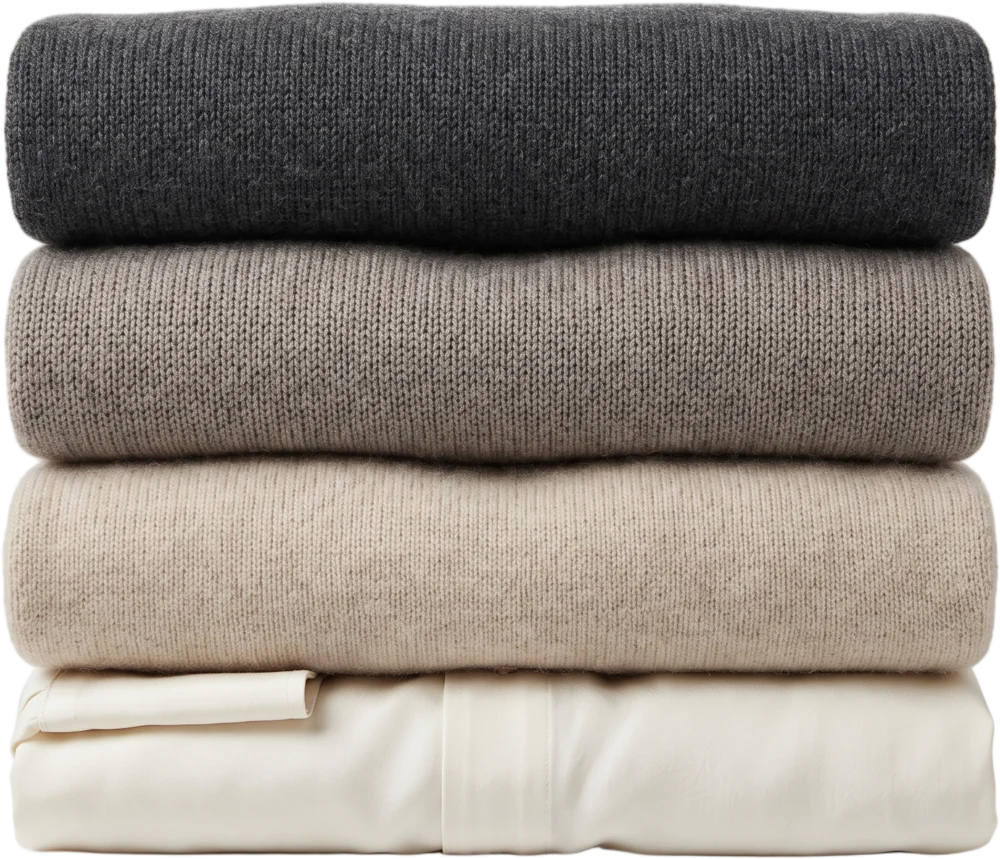
Every stage stays clickable in the breadcrumb, so you can go back to any of them. That was a correction, made after watching people use an earlier build. A line of steps with no way back turns each step into a commitment, and people stop moving and start second-guessing. The one thing that has to feel safe is changing your mind.
Spend on the lock, not on the set
The common mistake, mine repeatedly, is accepting a reference that is nearly right. The coat sits a little tight on the shoulder. The stance is slightly stiff. It is fine, you will fix it in the good ones.
You will not. You will develop forty variations of a slightly stiff stance, look at the grid, and understand that the problem was in frame one. A fourth or fifth attempt at the reference costs a handful of frames. A whole set built on a compromised lock costs the set, plus the afternoon you spend deciding whether you can live with it.
Be difficult about the lock and quick about everything after it. It is the same distribution of care a good photographer gives the first hour on set.
Choosing variations rather than describing them
Once the frame is locked, a variation is a choice. Pose, full length or medium, and a note when you actually have one. The house also knows what a frame will contain: a medium shot does not ask you about the shoes, because there are no shoes in a medium shot. Small thing, and it is the difference between something built by people who have done this work and something built by people who have not.
A lock is a constraint, and a constraint costs you something real. A set built from one reference will not give you a genuine change of light halfway through, and it should not. If the campaign wants a second register, that is a second lock and a second set, hung next to the first.
Develop a lot of variations at once and they run concurrently, so you can walk away. That is the Darkroom, in what the house has shipped. The step by step is in the lookbook docs, and the case for a shortlist of sets rather than a colour picker is the set is a decision.
The first hour on set was always the expensive one, and it still is. Everything after the lock is the cheap part, which is the right way round.
Questions
- What does it mean to lock a frame in FLAM?
- Locking means you approve one developed frame and the house holds it as the reference for everything after it. Pose, framing, lighting, ground and the model's identity carry forward from the locked frame into every variation, so the set reads as one continuous shoot. You lock once per lookbook, and you can unlock and lock a different frame at any point.
- Why not develop every frame independently?
- Because independently developed frames drift. Each one is a fresh roll of the dice on the light, on the stance, on how the coat falls, and side by side in a lookbook that drift is the first thing a buyer notices. A locked reference removes the variables you never wanted to vary and leaves only the ones you chose.
- Can I go back and change an earlier step in the lookbook?
- Yes. Every stage stays clickable in the breadcrumb: models, pieces, ground, lock, variations. Nothing you have chosen is trapped behind a step you have already passed, and changing an earlier choice does not throw away the later ones unless it genuinely invalidates them.
- How many frames does a typical lookbook take?
- One to three to reach a lock, then one per variation. The lock is where you should be willing to spend. A fourth attempt at the reference is cheap next to forty variations built on a reference that was only nearly right.