The same model, every frame
A model in FLAM is a collage: several views of one person, attached as the last reference on every develop. That is the whole of how a face holds across forty frames, and it beat the identity adapter we built the plumbing for.
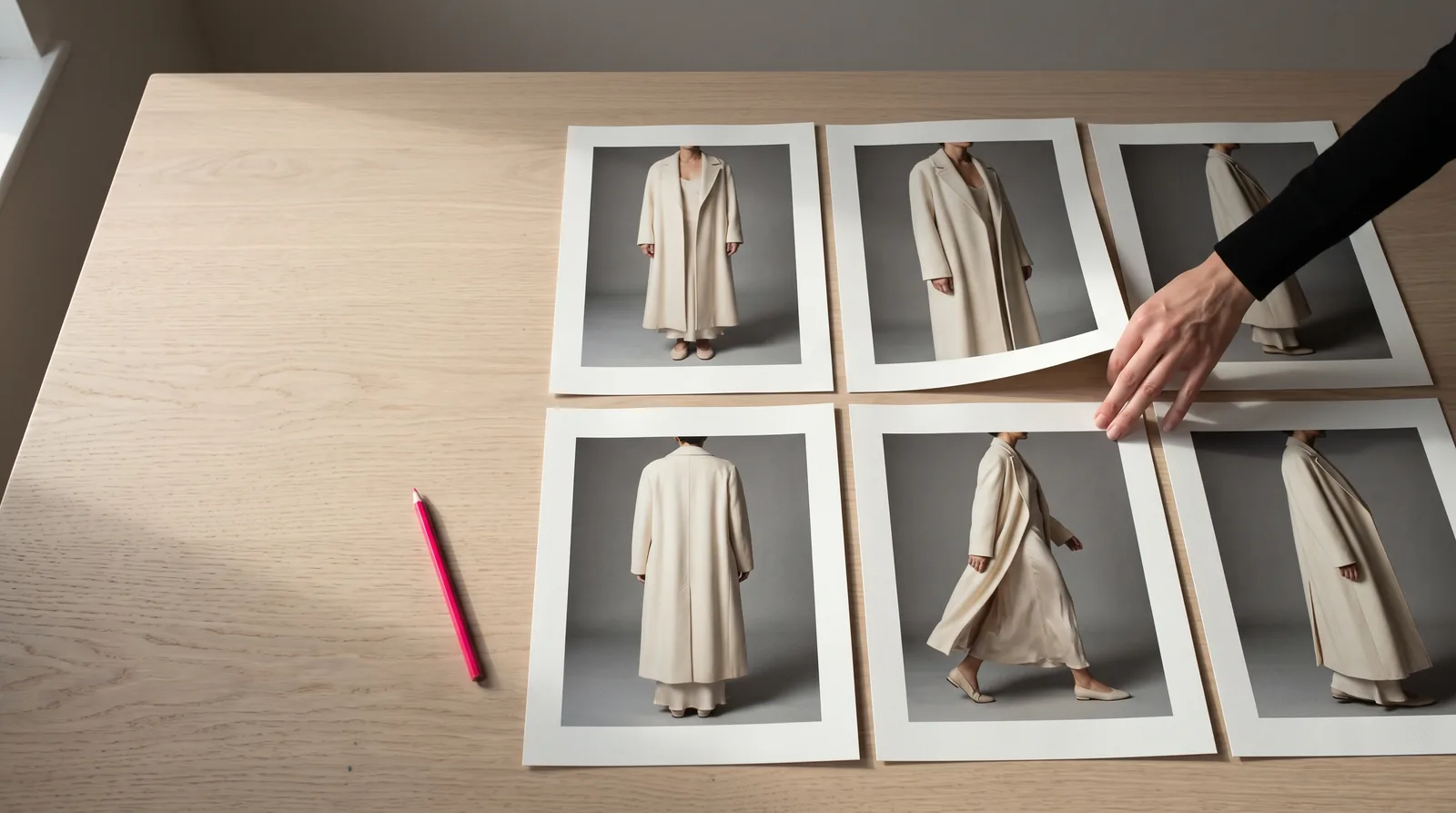
A model here is a collage: several views of one person composed into a single image and attached as the last reference on every develop. That is the whole of how a face holds across forty frames. It is not the answer we expected to end up with, and the one we expected was the more sophisticated of the two.
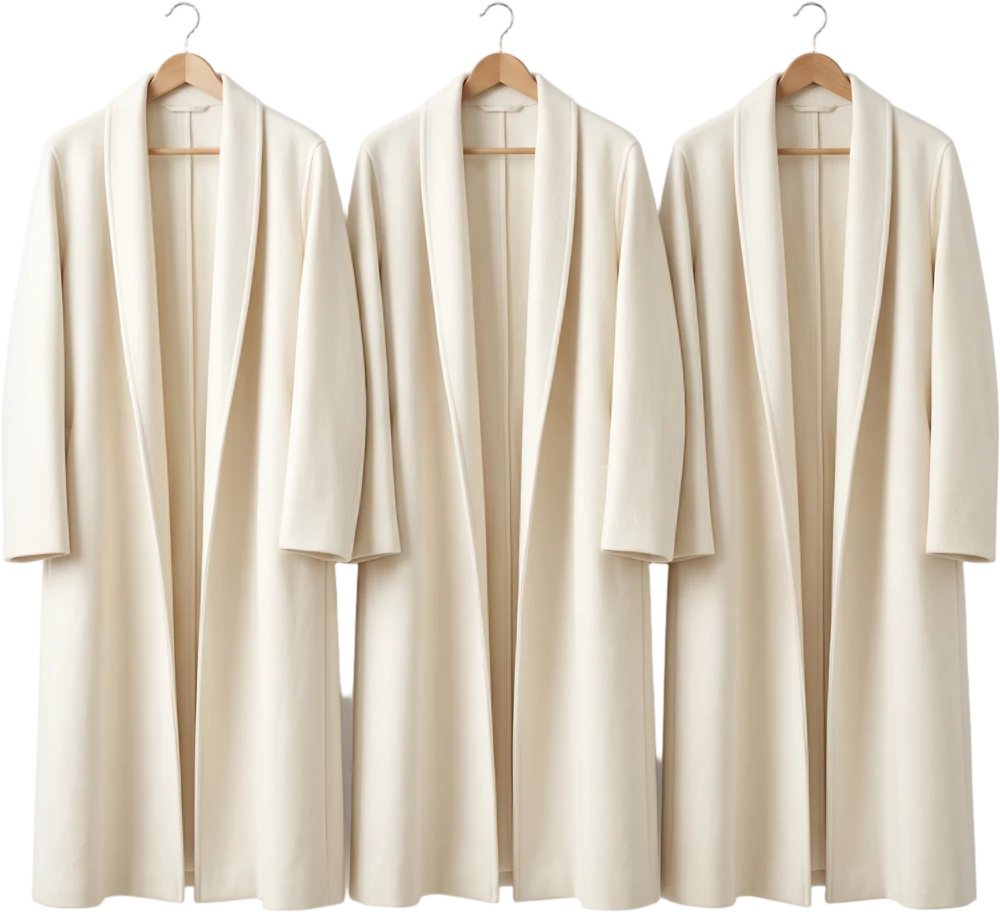
The obvious path is an identity lane: an adapter that pulls a face embedding out of a photograph and steers the develop toward it. There are good ones. We built the plumbing, ran the comparison honestly, and the collage won, not narrowly. The adapter held the face and cost us the fabric. Skin went faintly plastic. The wool started reading as rendered wool rather than as wool, and a fashion house cannot make that trade, because the garment is the product.
Why a single headshot drifts
A headshot is one angle, one light, one expression. Ask for a three-quarter turn and the model has to invent the side of the face it was never shown. It will invent something plausible, then something slightly different next time. Six frames later you have a person who is recognisably a family rather than an individual, and a buyer flipping the lookbook feels it before they can name it.
A collage removes the invention. Front, three-quarter, profile, a turn away: the structure of the face is in the reference, so none of it has to be guessed. The jaw is where the jaw is. The hairline sits where it sits. What varies is what you asked to vary.
This is also why the house refuses a single photograph when you bring your own model. Give it several, from different angles, in consistent light, without heavy retouching, and it composes the collage for you. That reads as a limitation and it is the opposite of one.
The last reference is the model
References are a sequence, not a bag, and each position means something. In the house's language the first reference is inspiration and the last is the model. Attach the collage anywhere else and it weakens. Attach two and they weaken each other. Prosaic knowledge, and it cost a lot of frames to learn.
The rule holds outside the screen too. A develop submitted from your own system is under the same constraint: send the collage last. The models docs spell out the shape, and the API docs mark what answers today and what is only designed.
How to check a set
Consistency is a property of the set, so it cannot be checked one frame at a time. Lay them all out, literally, on one screen, at a size where you can see faces, and look at the group. That is the whole method, and it is what the frame at the top of this post shows.
The jaw and the hairline in the turns go first. Frontal frames almost always hold. The three-quarters are where drift starts, because that is where invention starts.
Then the shoulder line under the garment. If the body's frame changes between shots the coat hangs differently, and the collection looks like it was fitted on two people.
Then the direction of the light, which is not identity at all but breaks a set faster than identity does. It is the easiest thing to lose if you develop frames independently instead of from a locked reference.
A set that passes those three will survive a buyer's meeting. A set that fails the last one will not survive the contact sheet.
The cloth is checked too
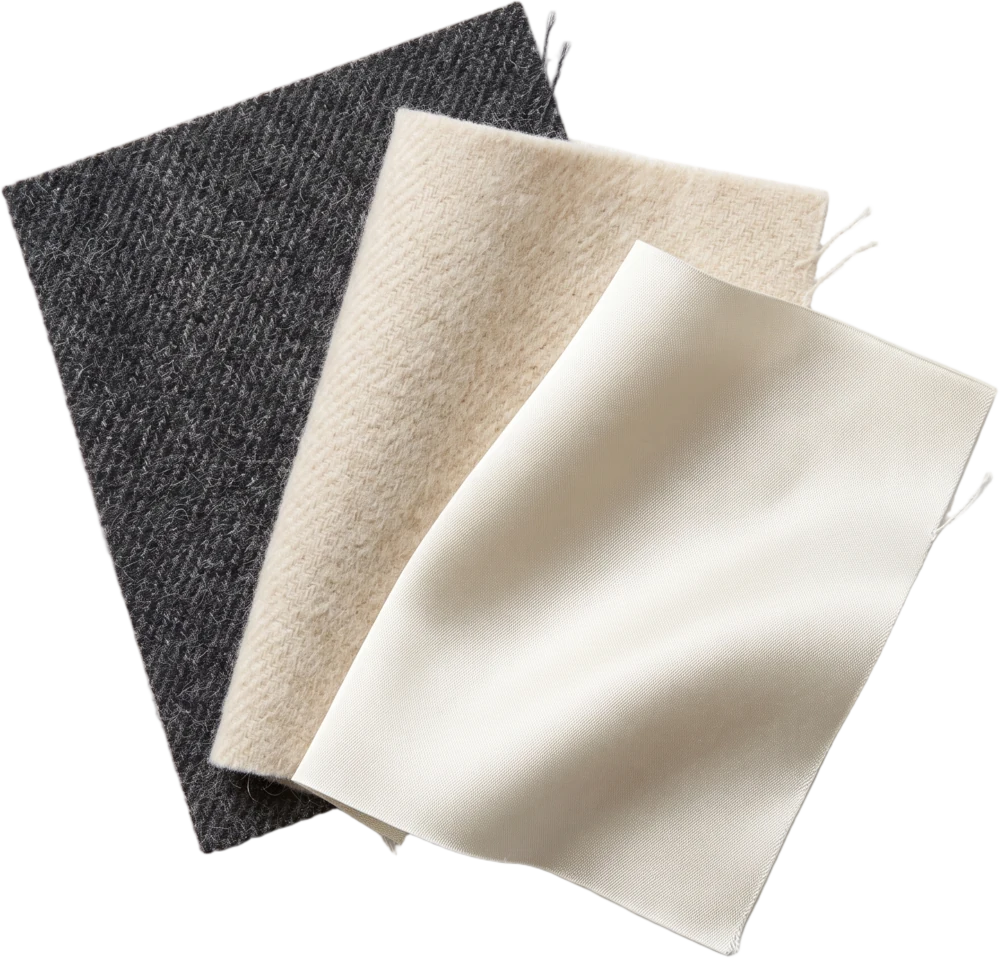
The other half of holding a look is material. Two frames of the same coat should show the same weave at the same distance, the same nap on the wool, the same sheen on the silk. Fabric is where the tell moved once faces got good. A face can be right while a knit is smooth in a way no knit has ever been.
The realism clauses ride on every develop for that reason: visible weave, natural folds, real fall. We check them on swatch-level crops when we tune them. If you are evaluating anything in this category, ask for a 100% crop of a cashmere rib. It is a fast and unkind test.
What a collage cannot do is give you a person who was not in the photographs. A model is only as good as the frames it was composed from, and six phone pictures in six different lights compose into a face that holds badly. Shoot the reference properly once, or take one from the board.
The board, bringing your own model and what a purchase includes are in what the house has shipped. The reason a set holds at all is the lock, and the reason the room behind the model stays put is the set is a decision.
Nobody in a buyer's meeting says that the identity held. They just do not stop on frame nine.
Questions
- How does FLAM keep the same model across an entire lookbook?
- By attaching a collage, several views of the same person in one reference image, as the last reference on every develop. A single headshot gives one angle to work from and it drifts as soon as the pose turns. A collage carries the structure of the face from several angles, which is what holds identity across a set.
- Can I use my own model instead of one from the board?
- Yes. Upload several photographs of the same person, from different angles, in consistent light, without heavy retouching, and the house composes the collage for you. It will not accept a single headshot as a model, because a single headshot does not hold.
- Do I need an identity adapter like InstantID or PuLID?
- No. Those exist to solve identity for a base model with no reference conditioning worth the name. When the model's collage is attached as the final reference, consistency comes from the reference itself, and the extra lane adds cost and a second failure mode without adding fidelity.
- How do I know whether a set actually held?
- Lay the frames out together and look at them as a group rather than one at a time. Consistency is a property of the set, so it can only be checked on the set. The tells are the jaw and hairline in the three-quarter turns, the shoulder line under the garment, and whether the light falls from the same place in every frame.